
30.09.2026
The warning signs hiding behind European consumer confidence
At first glance, Europe’s consumers appear remarkably resilient amid sustained economic uncertainty. Intrum’s latest European Consumer Payment Report (ECPR) shows most consumers are confident that they can afford essentials and provide for their families, while two-thirds are putting money aside each month for an emergency fund
Highlights of the article
- Confidence can be misleading: many Europeans feel financially secure, even as borrowing and late payments rise.
- Pressure is building beneath the surface: temporary coping strategies can quickly become signs of deeper financial strain.
- The most vulnerable are also the hardest to reach: fragile consumers are far more likely to avoid bills, balances and creditor contact.
- Early warning signs matter: businesses that spot changes in payment behaviour sooner can intervene before problems escalate.
- Better support starts with better understanding: personalised communication, flexibility and technology can help consumers stay engaged.
But signs of strain exist behind these headline figures. More than half of consumers have borrowed money or used a credit card to pay bills in the last six months and late payments are rising again after two years of improvement.
There are also significant behavioural divides between consumers that could worsen existing difficulties. Those in the weakest financial health are significantly more likely than others to disengage from their finances and avoid communicating with those they owe money to.
These warning signs come as European households face continued price pressures: eurozone inflation was projected to be 3.3 percent in August 2026, up from 2.9 percent in July. The European Central Bank also raised interest rates by 25 basis points to 2.50 percent in September 2026, citing ongoing conflict in the Middle East as a key factor.
Businesses increasingly need to recognise financial difficulty before it develops into persistent payment problems – especially when the consumers most in need of support may be the hardest to reach.
Headline resilience masks growing financial pressure
On several indicators, Europe’s consumers appear to be in a relatively strong financial position. The vast majority (80 per cent) say they are confident in their ability to cover the cost of essentials like food and fuel, 70 per cent say they are comfortable that they can provide for their families, and 66 percent are putting money aside each month in an emergency fund.
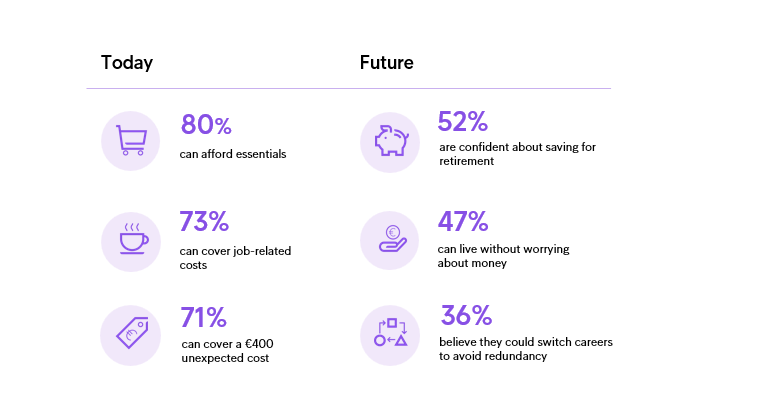
But this confidence is not reflected across other measures of financial health
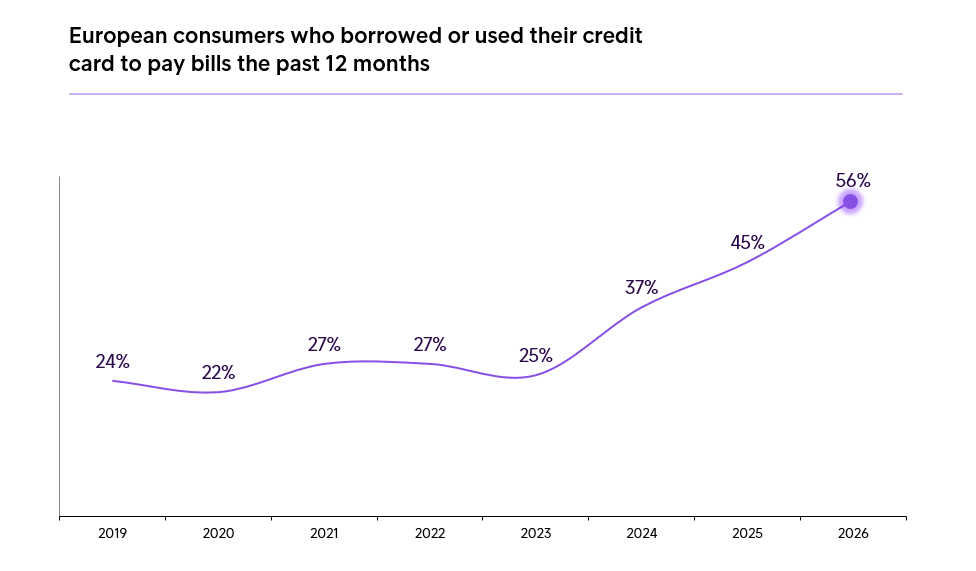
More than half (56 percent) say they have borrowed money or used a credit card in the past six months to pay a bill – the highest proportion since 2019.
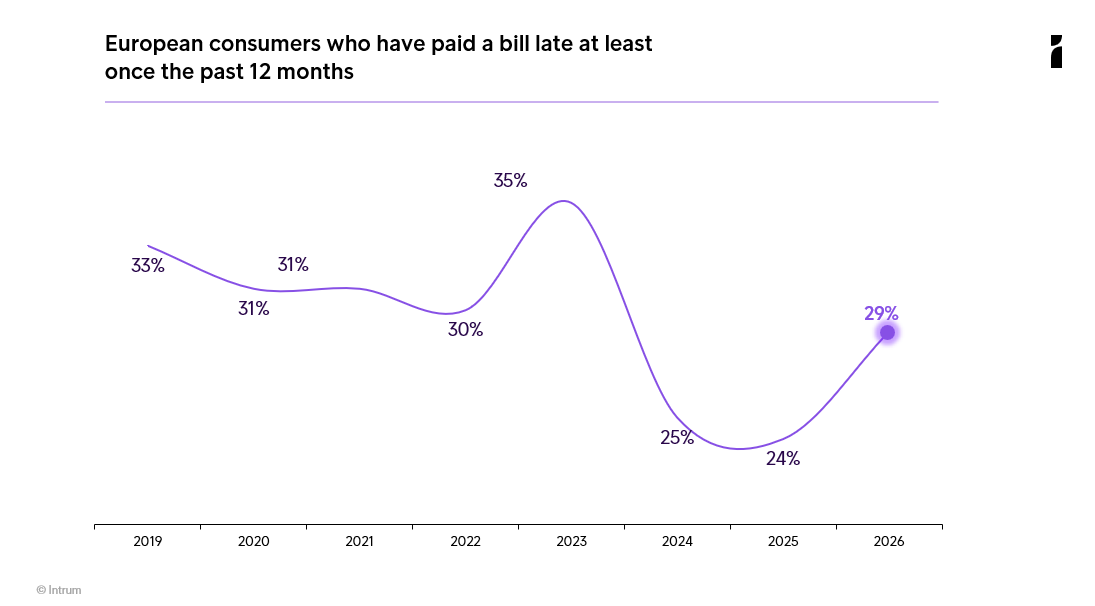
And after two years of improvement, 29 percent of consumers say they have not paid a bill on time at least once in the past 12 months, up from 24 percent in 2025.
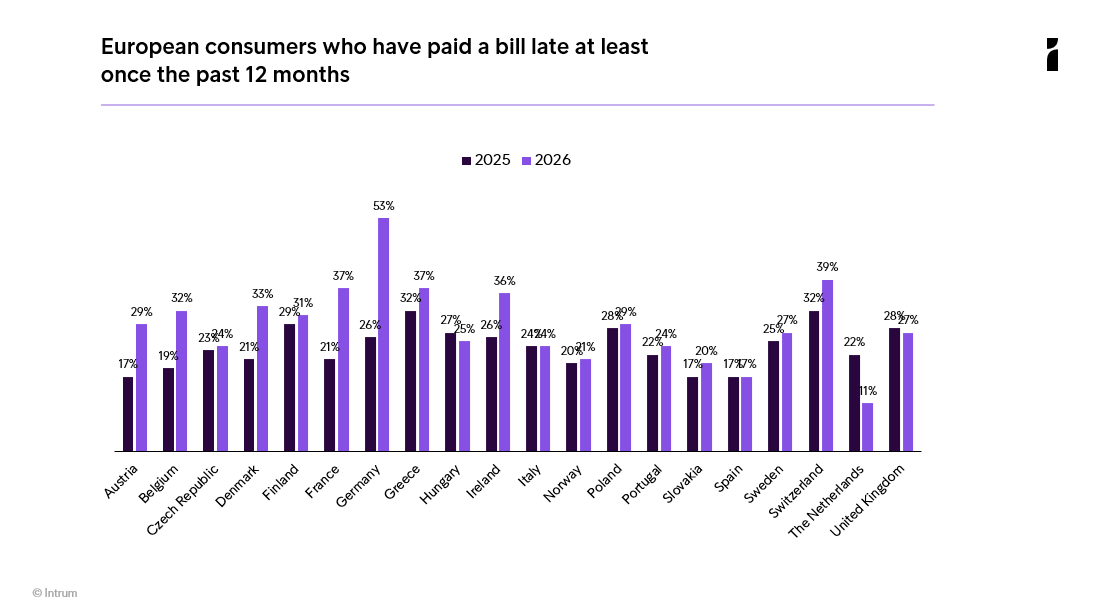
The European average also masks deep country divides. In Germany, 53 percent missed a bill payment, compared with just 11 percent in the Netherlands. While Germany stands out, the country’s high late payment rate largely reflects a rise in consumers missing two to four bills, rather than a chronic inability to pay.
Overall, the data adds complexity to the picture of consumer resilience. Occasional borrowing or isolated late payments do not mean a household is in financial difficulty. But the rise in both suggests that headline confidence alone does not tell the full story of Europeans’ financial health.
Intrum Money Management Index: Three consumer groups
Intrum’s Money Management Index combines data on borrowing, payment behaviour, debt and financial confidence to provide a broader assessment of European consumer financial health. Through this, three groups emerge.
These groups provide important context for understanding how different consumers behave when responding to financial pressure.
Financial pressure drives avoidance
Many financial factors, such as high living costs and stagnant wages, are out of the control of Europe’s consumers. But pressure is not just an affordability problem. A quarter of consumers who are struggling to pay off debt say they avoid thinking about or dealing with it because seeing their financial situation makes them anxious.
This rises to 39 percent among millennials, compared with just 16 percent of generation Z. The different financial pressures faced by millennials may provide some context, with the generation having navigated successive economic shocks alongside surging housing prices over the past two decades.
The divide between financially fragile and resilient consumers is particularly stark. Our findings show that those in poor financial health are far more likely to disengage. When comparing how the two groups react to finance worries, fragile consumers are:
- About 10 times as likely to avoid checking bank balances or credit card statements
- 18 times as likely to ignore communications or phone calls from those they owe money to
- 10 times as likely to delay opening letters or emails containing bills
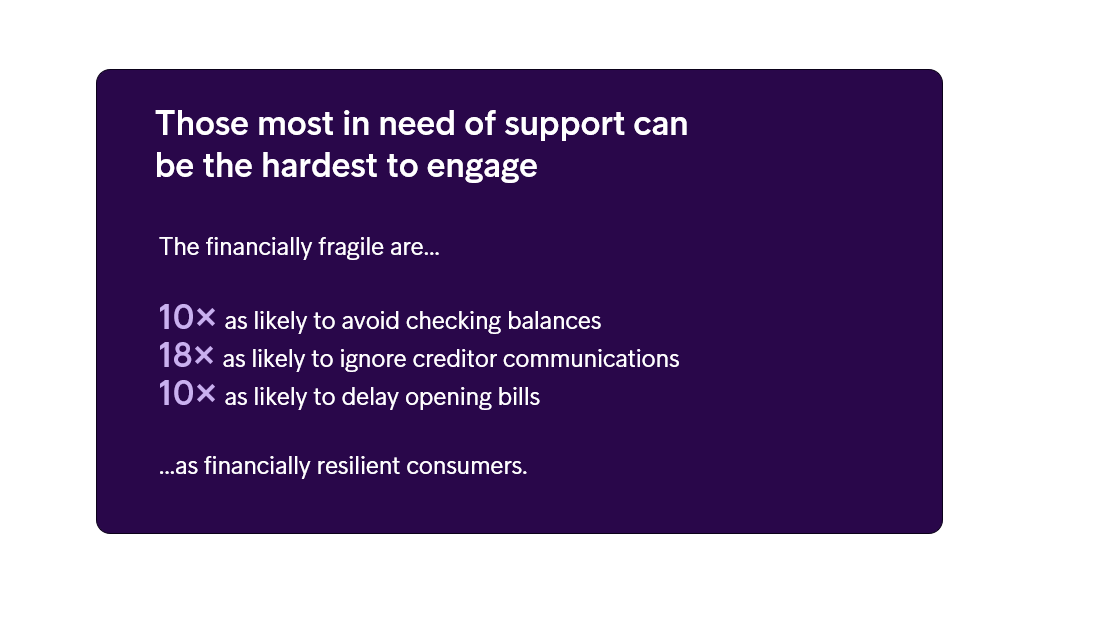
This creates a fundamental challenge for businesses, because the consumers who are most in need of financial support appear to be the hardest to engage with. Many traditional payment and collections processes depend on consumers responding to reminders or proactively asking for help. These findings reinforce the importance of identifying vulnerability and intervening early, as continued avoidance can allow manageable, isolated events to escalate into a cycle of financial distress.
Addressing fragility early is key
Avoidance among the financially fragile means businesses need to be more proactive about identifying signs of financial distress. Early intervention requires close attention to changes in payment behaviour and other early warning signals. New technologies can support this approach by spotting patterns that might otherwise be overlooked.
A consumer who simply forgets a payment will likely benefit from automated reminders, while someone experiencing a temporary cash flow pressure may benefit from greater payment flexibility. AI can play a valuable role, providing low-friction and non-judgemental assistance, with human support available to deal with more complex circumstances.
Once signs of vulnerability have been identified, businesses need to understand what is driving the problem and tailor their response accordingly. A consumer who simply forgets a payment will likely benefit from automated reminders, while someone experiencing a temporary cash flow pressure may benefit from greater payment flexibility. For a financially fragile consumer who is reluctant to engage, earlier and more personalised outreach may be required.
How that support is offered also matters. Adapting the frequency, tone and channel of communications can help businesses to reconnect with fragile consumers. AI can also play a valuable role, providing low-friction and non-judgemental assistance – with human support available to deal with more complex circumstances.
A stronger foundation for financial resilience
European consumers have demonstrated considerable resilience over years of challenging economic conditions. But ECPR shows why confidence alone cannot provide a complete picture of financial health. Rising borrowing and late payments reveal ongoing pressure, while the Money Management Index highlights worrying avoidance habits among the most vulnerable consumers.
Waiting until consumers default or ask for help may mean intervention happens too late. Instead, businesses need to recognise warning signs earlier and respond according to individual circumstances. Technology can make those interactions easier to manage and more accessible for consumers themselves.
B2B insights: The share of revenues paid late exceeded sustainable levels in 2026
There is also a strong business case for early intervention. Intrum’s European Payment Report (EPR) 2026, which surveys European businesses on payment management, found that the share of revenues paid late has exceeded sustainable levels, with most companies missing growth targets because of payment delays. Left unaddressed, persistent late payments could place further strain on cash flows.
As pressures persist for European consumers, true resilience is about more than affordability. Understanding how consumers respond to challenges will be increasingly important in preventing temporary difficulties from developing into long-term financial distress.


